| Education |
|
|
|

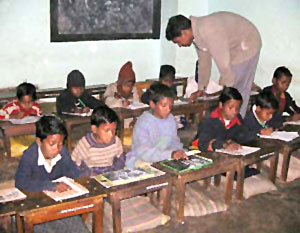
Education has always been the important tool to shape a career, but things have changed in the past few decades as the developed world has undergone a thorough change based upon information and knowledge. Nowadays, continuous career training and career education in India is no longer a plus but a need if you wish to progress in your career. A com...
|
|
| |
|
|
| Flora & Fauna |
|
|
|

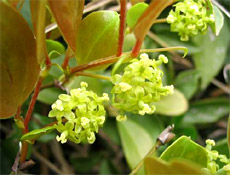
India is gifted with rich flora and fauna. It has one of the world`s richest habitats for flora and fauna. More than 4,000 different species of native flowering plants are found within its borders, along with 1000s species of trees and several hundred species of other plants. There are hundreds of varieties of trees , barderian flowering plants...
|
|
| |
| Geography of India |
|
|
|

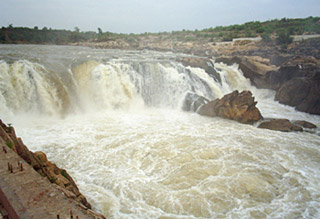
The geography of India is extremely diverse, with landscape ranging from snow-capped mountain ranges to deserts, plains, rainforests, hills and plateaus.India lies to the north of the equator between 8 degree 4 minutes and 37 degree 6 minutes north latitude and 68 degrees 7 minutes and 97 degrees 25 minutes east longitude.Get a complete reference o...
|
|
| |
| History of India |
|
|
|

A Snapshot of Indian History so that it can become a reference point for students, academics, researchers and others. India had many kings and rulers like Gupta, Maurya, Maratha, Moghal, etc. Indian history begins with the birth of the Indus Valley Civilization in sites like Mohenjo-Daro, Harappa, and Lothal, followed by the coming of the Aryans. ...
|
|
| |
| Indian Administration |
|
|
|

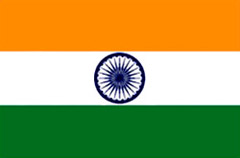
Indian Administration with special reference to Indian constitution, Politics, Executive , Legislature and indian judiciary. The Constitution of India is the constitution of the Republic of India. It was passed by the Constituent Assembly on November 26, 1949. The Indian Constitution closely follows the British Parliamentary model.India is administ...
|
|
| |
| Indian Languages |
|
|
|

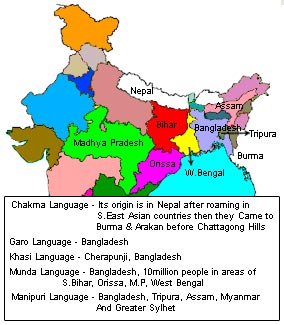
This indian language page lists the reference languages used in India. Most of the Indian languages have evolved from the Indo-European group of languages and There are eighteen national languages recognized by the Indian constitution and these are spoken in over 1600 dialects. India has a wide variety of local languages and in many cases the Stat...
|
|
| |
|
|
| Indian Literature |
|
|
|

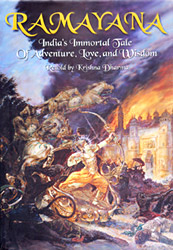
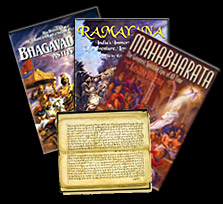
A Reference site covering all tit bits of Indian literature. Indian literature is generally acknowledged, but not wholly established, as the oldest in the world.India has a longstanding literary tradition that has gained immense international attention in the past few years.The earliest Indian literature took the form of the canonical Hindu sacred...
|
|
| |
| Indian Museums |
|
|
|

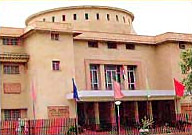
India is a land with a history and culture that goes back over 5000 years. Innumerable historical references , cities and monuments across the length and breadth of the country are a testimony to this rich cultural past. India`s museums offer visitors a rare opportunity to view over five millennia of concentrated culture under a single roof. In...
|
|
| |
|
|
| Indian Philosophy |
|
|
|

This section will focus on the various approaches and issues relating to philosophy with special reference to Indian Philosophy.The old civilisation of India was a concrete unity of many-sided developments in art, architecture, literature, religion, morals, and science so far as it was understood in those days. But the most important achievement of...
|
|
| |
| Indian Purans |
|
|
|

Purana literally means ancient. In addition to the Vedas, Upanishads and the epics Ramayana, and Mahabharata, these texts are major sources of the tales from Indian Mythology.Indian heritage has reached to masses in India through 18 puranas, because of their certain outstanding references. These puranas are Brahma Purana , Padma Purana , Vaishnava...
|
|
| |
| Indian Temples |
|
|
|

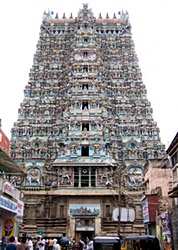
This section of Indian reference is based on an approach to study temples of India and about their forms and foundations. There are millions of temples in India.The basic form of the temple in India is a square cell, oriented to the four cardinal directions, containing a platform with an image of the deity in the center, a flat roof overhead, an...
|
|
| |
|